Tuesday, September 15, 2020

Trials of a First-Year Principal: Getting Hired - as Published in the NAESP Communicator September, 2020


Principal leadership matters now more than ever. The Wallace Foundation, in their studies on school leadership, cites extensive research on principal leadership being second only to teacher efficacy in positive effect on student learning. After serving as a band director for nine years and assistant principal for six years, this year I am proud to serve as a middle school campus principal for the first time. Over the next twelve months, I will reflect on my journey as a first-year principal. From deciding when to start applying through preparing for year two, I will share successes, failures, tips, and pitfalls to support you on your journey in school leadership. While each person has their own journey, I hope that my story will, in some small part, support you and ultimately the students that you serve. Thanks for taking a ride with me on this amazing roller coaster of school leadership.

Am I ready to be a principal?

Great question! The short answer is probably no, but we must start somewhere. When I started my career as a band director more than fifteen years ago, if you would have told me I was going to be a campus principal, I would have probably laughed hysterically at the notion. Like many of you, however, one day a mentor walked up to me out of nowhere and asked, “what’s your plan.” For me, that mentor was my then superintendent and he showed up at the practice field where my marching band was rehearsing. When my superintendent asked about my future and showed confidence in my potential as a school leader, it was all the motivation I needed to start thinking about how I could scale my leadership influence beyond the band hall to support student learning at the campus level. Eight months later I began my first year as an assistant principal.

After three years of serving as a middle school assistant principal, I thought I knew all there was to know about campus administration and was ready to be “in the seat.” Looking back, there was no way that I was ready for the principalship. After three years of serving as assistant principal, I had the opportunity to open a brand-new campus in my school district and take on a different role. While my first three years as an assistant principal centered around student discipline, classroom management, and teacher evaluations, my role in the new school would be focused more on student support and intervention programs. I served alongside a supportive principal who allowed me to create and supervise systems that supported student learning that typically belong to the campus principal. I supervised development of the master schedule and facilitated the creation, implementation, and review of the campus improvement plan. Among other opportunities, these were two ways that my principal was preparing me to understand the principalship at the systems level. During these same three years, I completed my doctorate in K-12 Educational Leadership from Baylor University where I learned from a cohort of colleagues that are some of the smartest minds in education.

Campus principals will tell you that there is a stark difference between the role of principal and assistant principal. That does not prevent you, however, from searching out ways to think and operate at the systems level on your campus. I am more confident in beginning my first year as principal because of the opportunities I searched out. Do not wait for the invitation to serve on a district-wide committee or start a new outreach program. Seek these opportunities out to start building your understanding of the broader scope of leadership within the school setting. I was surprised, as I reflected on the interview process for my new position, how often I was able to draw on my experiences that I otherwise would not have had if I was not aggressive about learning and serving beyond the scope of assistant principal. Also, seek out ways to build your network of leadership development and support. A large part of my network is through my doctoral program. Some other ways to develop your network include:

·        following thought leaders on social media platforms.

·        attending state and national conferences offered through organizations such as NAESP.

·        organizing group sessions with other aspiring leaders within your school district or region.

·        starting a blog, podcast, or Twitter Chat to share your leadership journey.

Defining Your “Yes”

According to a report by the Learning Policy Institute, the average tenure of a public school principal is four years with one-third of principals leaving their position within the first two years. Many reasons why one would leave their principal position may be out of their control, such as salary, pressures of high-stakes accountability systems, and poor working conditions. The search for the right fit in professional and personal aspirations, however, is within the candidates control and should be carefully considered.

I spent the first fifteen years of my professional career in the same school district, a large suburban school district. When I began pursuing the principalship, my assumption was that I would serve in the same district. I had little desire to move and learning the systems in surrounding districts did not interest me. Considering a move to be closer to my wife’s family was the only reason that I would consider a move. When a principal vacancy opened in her hometown, I was ready to apply because I knew exactly what my parameters were to serve.

As leaders, we are often driven to promote to the next level of leadership to serve in the most impactful way within our circle of influence. If we have not defined what is best personally and professionally prior to starting the search, it is easy to jump at every new vacancy and land in a pitfall of a seat that is not the right one for you or the students and staff that you serve. Some things to consider when defining your yes:

·        What geographic region do I want to serve (urban, suburban, rural)?

·        How will this move affect my family?

·        Will this district help me to grow and allow me to lead?

·        Is this district’s strategic plan and daily operations aligned with my core values?

I knew well before I hit the submit button on the application at my new school district that I would be proud to serve within that community because I conducted extensive research before the job was ever posted. While you can never know the extent of the internal culture of the district, studying each page of the school’s and district’s websites, watching school board meetings, reading news articles, and searching out information from your network of colleagues will help to you know if that is the right working environment for you. You deserve to work in an environment that will leverage your skill set and support your leadership style. If you will struggle to say “yes” if offered the job, then that particular job in that particular district is probably not the fit for you. Keep researching and define your “yes” so that you create the best opportunity for sustained success. Once you have defined your “yes,” the application process is the next milestone on the journey towards the principalship.  

Preparing Your Application

If you have been a part of any applicant screening process, you know that it can be a daunting task to learn all you need to know about a candidate written on a few sheets of paper. Take that thought and apply it to your own resume and application. While every district and every principal search are different, it is common for a school district to receive triple-digit number of applications for a principal position. Your cover letter, resume, and application may get a 90-second perusal on the first screening whether to include yours in the “consider further” or “not at this time” piles. If your application lacks substance as it relates to the position that is organized in a reader-friendly fashion, you may struggle get noticed. Yes, bold colors and unique design layouts may catch the reviewer’s eye, but the real effort should be in organizing your skill set, vision, and experiences in a way that tells your story and how it relates to the campus that you aspire to serve.

Through district research and preparation of materials for the application process of my new position, I learned that the district valued strong community connections. Therefore, in my cover letter, I made sure to highlight my family connection to the district and how I served the community in my previous district. I also researched the demographics and assessment history of the district. Having a strong understanding of these components of the campus allowed me to know how to include the systems of campus improvement that I facilitated on my previous campus. I do not know exactly what information jumped off the page that made my district want to interview me, but I do know that digging deep in understanding the district, especially as an outsider, allowed me to connect my leadership experiences to the needs of the school district I aspired to serve. Here are some ways that you can make your application materials stand out:

·        Update your resume every time you complete a noteworthy task, presentation, or committee participation.

·        Avoid using a “one-size-fits-all” cover letter by introducing yourself in a way that connects to the unique needs of the school and district to which you are applying.

·        Ask your network of leaders to share their past cover letters and resumes and use them as a point of reflection for your own resume.

·        Be as detailed as possible in your online application and triple-check spelling and grammar.

Just like your individual personality and leadership style, your application, resume, and cover letter should tell about your unique qualities and experiences and how they relate to the position within the district where you aspire to serve. This will stand out more than any fancy font or contemporary template. In many instances, this is the first impression that district leaders see in how you will lead your campus once you become part of the team.

Wrapping it Up

While I never felt entirely ready for the principal position, I prepared, and continue to prepare, every day for the opportunity to serve. Paraphrasing French chemist, Louis Pasteur, chance favors the prepared mind. We have no control over whether we get the call to interview for a position. We do, however, have complete control as to how we prepare, both in our everyday learning and understanding of the role of principal and in how we prepare our documents for the application. When you define your “yes,” you can dig deeper into researching schools and districts that you will potentially serve. This allows you to focus more on quality and less on quantity in the principal search process. Then, out of the blue, the phone rings with the invitation to interview.

Yikes! Now what? We will discuss that next month!


Christopher Bailey is proud to serve as principal at Clack Middle School in the Abilene I.S.D. Dr. Connect with Dr. Bailey on Twitter. @stixbailey

Friday, October 18, 2019

For My Fine Arts Colleagues: Fine Arts Are More Than a Fringe Benefit


The skills that employers are looking for in the global market are well documented. Futurists like Thomas Frey describe industries that our current students will work in, like personal rapid transit systems and atmospheric water harvesting, these among the plethora of jobs that do not exist yet, but soon will. These jobs will require creative thinkers and those with an entrepreneurial spirit. There has never been a more important time to teach creativity, curiosity, passion, and persistence through music education than right now.
It is our responsibility as music professionals to advocate for the arts to be more than a fringe benefit and become core content for all learners. If you, as a music educator, have ever felt like you were beating your head against a wall when trying to explain what you do to administrators, you are not alone. 

Here some ways you can advocate for your program through educating your administrator:

Communicate a Clear Vision
Vision is universal. When you make connections with other content areas, it can help administrators identify with what you do. When you do this, think of the big picture skills. How does collaboration in choir teach kids to perform stronger in an inquiry-based social studies classroom? How can the theatre production become a part of the school’s social skills lessons about digital citizenship? The connections are endless, but you cannot assume that an administrator that may enter your classroom twice a year will discover these opportunities.

Teach About the Needed Staff Skill Sets
When it is time to hire staff members, your administrator may assume a band director is a band director. They may not realize that the need for diversity of skill sets exists when hiring staff members. Advocate for being a part of the hiring process. Highlight areas that you need to have like-minded colleagues and areas where diversity is key. When your administrator comes to your classroom or concert, take the time to explain to them what is happening. When they are in your environment, this is the time to help them learn about what you and your students do. Avoid talking about the administrative tasks or business components of the work. Save that for their office.

Stop Comparing Fine Arts to Standardized Testing
Standardized testing, by definition, is designed to test to the least common denominator where everyone is the same. Hopefully, your fine arts program is designed to be an environment that promotes freedom for creativity and expression. You work tirelessly to teach and motivate your students to a standard of excellence where no one is left behind and where each member of the ensemble is accountable for the success or failure of the other. This in no way compares to standardized assessments and when you put what you do in those terms, it devalues your work.

Tell Your Story
If you do not tell your story, someone else will. Embracing social media to tell the learning journey is becoming more commonplace. There are those, however, who still do not see how social media can be leveraged to advocate for student learning. The reality is that people are never going to become less connected through digital mediums. These resources are only going to become more woven into the fabric of how we interact. Figure out how your students and parents communicate, and become comfortable in these spaces. For instance, Facebook may be a great way to connect with parents, but students are not flocking to this space anymore. Twitter can be leveraged as a professional development tool, connecting with musicians and educators around the globe, but parents may not find this a great place to learn of upcoming events. Instagram and Snapchat are popular among many students, but may not be great resources for professionals. The point is, know how to leverage these digital tools to become a better at your craft, communicate with your community, and share the great things happening in your program.

You will never know the true impact of your influence. The skills you teach today WILL serve students in the future. When you embrace your role beyond the podium and use the resources around you to prepare students for the next level of their life, you plant seeds that will grow into our next leaders in all industries. Your work matters every single day!

Friday, July 27, 2018

I Hate School but I love Learning

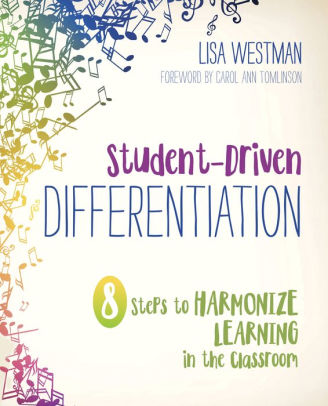
My Lead Up Katycast co-hosts and I were recently recording an upcoming podcast with Instructional Coach and student-centered differentiation guru, Lisa Westman, who was in town facilitating staff development. We met her in the Executive Lounge of the beautiful J.W. Marriott in downtown Houston to record the podcast. The podcast discussion with Lisa was an inspiring look into her new book, Student-Driven Differentiation

What happened after we finished recording the podcast was as engaging and thought-provoking as the podcast itself. David was the concierge in the lounge and was gracious to help us set up our on-site recording studio. David, a young adult, happened to be listening in on the discussion during the recording of the podcast. As we were packing up, David came over with some questions about what we were talking about.

Image result for lead up katycastOne of the topics during the podcast explored how in education we tend to revamp the same outdated, Industrial Age, conveyor belt system of education instead of pushing towards a new paradigm of learning. David wanted to know more about this topic and how we knew it was time to try something different. He exclaimed “I hated school but I love learning” and he was curious about how education could change for his sister who is still in school.

I’ve known people feel this way, but I have never heard someone say this as plainly and emphatically as David. He was genuinely concerned about the future of learning and how our educative systems will change. We have an obligation to design learning experience to engage students in school. From her book, some of the ways Lisa says this can occur is through relationship building (pg. 6), creating experiential learning opportunities (pg. 81), and meeting the needs, intellectually, socially, and emotionally of all students (pg. 111). I could elaborate on these topics, but get Lisa’s book. You won’t be disappointed!

There were two powerful takeaways from this experience. The first one is that we have to continue to redefine how learning occurs in our brick and mortar buildings with student voice, choice, and feedback as part of the process. The other is that you never know who is listening, watching, or reading. If you are creating content though a blog, podcast, vlog or otherwise, whether you think it is making a difference or not, IT IS! I am glad David listened in during the recording and was concerned enough about the future of education to ask questions about where we go from here. His concern was a conviction for me to get back to blogging and sharing my story.


You will never know the true extent of your influence…keep creating!

Sunday, August 2, 2015

Don't kick out the cooks; build a bigger kitchen!

We have all heard them...cliches about having too many leaders and not enough followers:


     "...too many cooks in the kitchen..."
     "...too many chiefs and not enough indians..."
     "...too many chefs spoil the soup..."

Well I am here to encourage you to turn over a new leaf. Instead of setting limits on who holds the title of "leader" on our campuses, why don't we work to build leadership capacity for everyone who desires to do so? When we work to create a climate on our campus where it is socially acceptable to work beyond the status quo, we tell students that it is socially acceptable to do the same.

Students are innately aware of those adults on campus who set the standard for others. They naturally gravitate to these adults and look up to them as mentors and "keepers of the knowledge" on campus. These adults may or may not be anymore equipped with the knowledge to helps students, but the more important things is that they are equipped with the desire to help students and will search out ways to helps students be more successful. The more adults we have on our campus that students look up to as "leaders" the better we build a campus of collaboration that ultimately leads to student success, in school and beyond as they become leaders.

We build leadership capacity on our campus in many ways. Some are direct professional development opportunities and others are woven into the everyday actions of students and adults on our campus. Overtime, this becomes the culture that students and adults aspire to be a part of.

Model by doing:

The most fundamental way of growing leadership capacity is to be a leader that others want to follow. Those leaders who are willing to do anything they are asking others to do model servant leadership and set the example for others as they grow into leadership positions.

Give autonomy to complete assigned tasks:

Allow students and adults to think of creative ways to complete tasks that you have assigned. Support by listening to ideas, actions, and updates, but avoid micromanagement of these tasks. When you give others autonomy to make decisions regarding assigned tasks, you gain trust and an understanding of mutual professionalism.

Get excited about other ideas:

We can get caught up in our own vision that we have for our students, staff, and community and inadvertently stifle others from adding their voice to the collective vision of the campus. Be there in the moment when someone brings an idea to you and come with a spirit of "how can I make this happen?" Too often we start poking holes in ideas too quickly or start with the filter of "how does this affect me" as opposed to "how can this help our learning community?" The idea that someone is bringing to you may not fit exactly into your plan, but if you listen and get excited about it, this will open the dialogue for you to offer a modification to the idea that will help better align with the campus goals.

Provide meaningful professional development:

Professional development in the area of growing as a leader is certainly important, but providing meaningful professional development in all growth areas within the learning community models what you see as important on your campus and as a leader. Provide professional development that is in line with the vision your campus has for student success. Ask adults on your campus, and I mean all adults, what areas of growth interest them. You may do this in the form of a survey or in face-to-face conferences, but be sure every voice is heard on campus. Then find the trends to guide what you offer for professional growth opportunities.

Provide opportunities for others to present professional development:

There is no better way to grow leadership capacity than by jumping in and sharing with others. Give adults on campus opportunities to share as the expert. For some this may be intimidating, but encouraging those to move past their comfort zone, and supporting them along the way, will help them grow as leaders and learners.

Find ways for leaders to practice the craft:

We can all probably remember coming out of college and thinking we had it figured out only to start day one, quickly to find out the only thing we had figured out is that we didn't know very much. I still feel sorry for that first set of band kids that had me as a director. We learn by doing and growing in our craft. Find ways to allow others on campus to practice the craft of being a leader. If you have aspiring principals, ask them to sub in the office when other administrators are off campus or shadow you as you work throughout the day. Give opportunities for teachers to lead PLC meetings, maybe rotating through all teachers within that PLC. Also, consider giving campus projects to those who may have advanced experience in a given field.

Celebrate advancement:

Whether its a promotion on your campus, selection on a state board, or an assistant principal moving to their first building principal-ship, celebrate these successes in a public way. When we get in the habit of celebrating the successes of others, we create a climate of mutual respect and excitement. We also encourage others to work towards their own professional goals. Besides, who doesn't like to hear their name on the P.A., see their name in the newsletter, or be celebrated on Twitter?

Building leadership capacity helps to create a culture where mutual respect for each others ideas and being a life-long learner is celebrated. I can think of no better accomplishment as a leader than to see students and other adults move on to be leaders in their fields and their careers because of the opportunities that I may have provided for them. I do not believe "too many chefs spoil the soup." I believe the more chefs, the better the gumbo. The better the gumbo, the more that will get to enjoy it. Don't kick out the cooks; build a bigger kitchen!

Wednesday, February 25, 2015

The Middle Child Syndrome

Every school-day begins with getting my 4 year old son up at 5:40am and ready to start his Pre-K day. If you have children, you know that some days this is easier accomplished than others. Last week brought an exceptionally difficult morning in getting ready for school. The reasons are endless as to why Eli was stubborn this specific morning, but all I could think is "why does he fit the mold as the middle child?"

We eventually made it into the car and off to school we went. My thoughts about Eli being the middle child continued. Thinking back through his four years of life, he has always had the "middle child mentality" but he only became the middle child eight weeks ago when his little brother, Isaac was born. The Middle Child Syndrome is a real thing that has been researched throughout the years. The oldest child gets the experience of doing everything first. To mom and me, everything is new and hip so we are learning along the way, which makes it exciting for all of us. The youngest child gets the initial attention of being the "new toy" in the house and continues throughout their life to be the baby, often being spoiled and pampered. (I am the baby of six...mom still calls me the baby.) This leaves the middle child to beg for attention and to find their place within the household dynamic. We certainly try to counteract the Middle Child Syndrome, but sometimes we just don't do a very good job. As I pondered on Eli being the middle child, it made me think about how the Middle Child Syndrome parallels systems within our schools.

1. PreAP, GT, and Special Learners - I was recently in a GT training where the facilitator put about twenty people in a line, creating a human spectrum of learning needs, ranging from students receiving services in Special Education to the students in Gifted and Talented programming. To no surprise, the majority of the spectrum consisted of students "in the middle," representing students in general education classes. On my campus roughly 10% of students are served through special education services. PreAP and GT students make up approximately another 10% of students. That leaves about 80% of the student body in "general ed classes." We spend large amounts of time, money, and legislation on the 20% and often leave the rest to receive a generic, one-size-fits-all classroom. We preach differentiation to our teachers, but do we provide them the resources and professional development to meet EVERY student at their individual ability and learning style?

2. "Core" Curriculum - Math, Science, Language Arts, and Social Studies are considered our "core content" areas. Generally speaking, every student studies these courses every year in an industrial assembly line fashion. Then there are electives designed to "enrich" a student's learning experience. Students choose whether they want to take these courses or not. Right in the middle are the Fine Arts and Physical Education classes where there are some requirement for these courses, but they are not required every year.  We know why it is important for students to grow up with healthy habits and a physically active lifestyle, but we treat PE like the middle child, not giving it much attention until the affects of not having more of it are out of control. Likewise, with fine arts, studies overwhelmingly show the importance the arts play in brain development and cognition, but we still treat it like a fringe benefit. In a global market where high demand jobs such as App Developer and Social Media Manager didn't even exist a decade ago, shouldn't we be putting our educational emphasis and how to be creative? There is no better place to start than in the arts.

3. Discipline - As I entered the world of administration, I was naive about how much of my day would be devoted to discipline. I work at a school where there are not a ton of discipline problems, but it still takes up a good portion of my day. I can only imagine being on a campus where this is more of a challenge. In regards to discipline, we tend to spend the bulk of our time on the "fire" that is currently burning; the he-said-she-said drama or the physical contact that is just around the corner. On my campus, we also do a pretty good job with celebrating those that go above and beyond to be great citizens, although we could always do more. But as I think about this in terms of the middle child, I don't think we do a very good job at noticing the rank-and-file student for the great way they act all the time. They may not go out of their way to clean the halls or help in a teacher in a dynamic way, but they come to school and work hard and do what is expected of them. If we spent more time celebrating THAT student, would that have an effect on the others?

If we looked hard enough I think we could find the middle child in many of our systems in education. Bringing up the bottom while celebrating and challenging the top in every system is important, but we can work harder with identifying the middle child and giving them the attention they so desperately crave. I don't think Eli will ever stop having the "Middle Child Syndrome" but being aware and counteracting his demeanor with my attention will make great strides in growing his sense of belonging. What is the "middle child" on your campus?